
How Job Placement Services Improve Onboarding for Job Seekers
Distribute My Resume11 min read. Published on December 15, 2025

TopResume Editor

Poor onboarding costs more than just time and energy. For job seekers, it can damage confidence, stall career growth, and turn what should be an exciting new chapter into a stressful experience that ends far too quickly. In fact, nearly half of employees leave a job within their first year, often because the role or environment was not what they expected.
What many job seekers do not realize is that job placement services can play a critical role well beyond helping you land an offer. The right placement service supports you before day one, during onboarding, and throughout the critical first months, helping you settle in, succeed, and build long-term momentum in your career.
This article explores how placement services improve onboarding outcomes from the job seeker’s perspective and why that support can make the difference between another short-term role and a job that truly fits.
Understanding the Onboarding Experience from a Job Seeker’s Perspective
Starting a new job is more than learning systems and processes. It is a period of emotional adjustment, expectation testing, and confidence building. How this phase unfolds often determines whether a job feels like a step forward or a mistake.
The Real Cost of a Bad Start
A poor onboarding experience does not just affect employers. It can have lasting consequences for individuals navigating their careers.
For job seekers, the direct costs often include:
- Weeks or months of stress and uncertainty
- Feeling unprepared or unsupported in a new role
- Wasted effort learning systems or processes that never fully make sense
- The pressure of job searching again sooner than expected
There are also hidden costs that are easy to underestimate:
- Loss of confidence after struggling early
- Resume gaps or short tenures that are hard to explain
- Anxiety about making the “wrong choice” again
- Burnout from repeated false starts
Imagine accepting a role you were excited about, only to realize within weeks that expectations were unclear and support was minimal. Even if you leave quickly, the experience can shake your trust in your own judgment and slow your career progress.
This is where placement services add real value for individuals, not by pushing you into a role, but by helping you avoid the wrong one in the first place.
Why the First 90 Days Matter So Much
The first few months in a new job are when impressions solidify and habits form. This is also when many people quietly decide whether they will stay or start planning an exit.
Research from the Society for Human Resource Management shows that effective onboarding significantly improves confidence, engagement, and productivity during the early months of employment. From a job seeker’s point of view, strong onboarding supports three essential needs:
- Confidence: You need to feel capable and informed. Clear expectations, proper training, and early wins help you believe you belong in the role.
- Connection: Feeling isolated is one of the fastest ways to disengage. Early relationships with managers and teammates shape how comfortable you feel asking questions and contributing.
- Purpose: People stay engaged when they understand how their work matters. Knowing how your role fits into the bigger picture makes daily tasks feel meaningful.
Tip: The first 90 days are not about proving everything at once. They are about learning, building trust, and setting a foundation you can grow on.
Pre-Onboarding: How Placement Services Help You Start Strong
Long before your first day, your onboarding experience has already begun. Pre-onboarding is where expectations are set and many future frustrations can either be prevented or locked in.
Matching You with the Right Role and Environment
Good placement services do more than match resumes to job descriptions. They focus on alignment that supports long-term success. This includes:
- Ensuring your skills match what the role actually requires
- Understanding how you like to work and learn
- Considering your career goals, not just immediate placement
- Assessing whether the company culture fits your values and work style
Instead of guessing whether a role will suit you, placement services help reduce the risk of walking into an environment where you are set up to struggle.
Preparing You Before Day One
Many people start a new job feeling unprepared, not because they lack ability, but because they are walking into the unknown. Interviews often focus on selling the role, not on explaining what day-to-day work actually feels like. As a result, job seekers may arrive on their first day unsure of priorities, expectations, or even how success will be measured early on.
Placement services often help bridge this gap by providing clarity before you officially start. While they may not control the onboarding process inside the company, they can help you better understand what lies ahead so fewer surprises catch you off guard.
Pre-onboarding support may include:
- Clear explanations of your role and responsibilities
- Honest conversations about challenges you may face
- Guidance on first-day logistics and expectations
- Early access to learning materials or tools when possible
This preparation helps you walk into your first day informed and confident rather than anxious and unsure. When you know what to expect, you can focus on learning, building relationships, and making a positive first impression rather than simply trying to keep up.
Job Placement Services Can Support You During Formal Onboarding
Starting a new role does not mean placement support suddenly ends, but it does change. Most placement services are not embedded inside your new company, so they do not run onboarding programs or manage your training schedule. What they can do is help you navigate the experience with more clarity and confidence, especially during the early adjustment period.
During formal onboarding, placement services typically act as a resource rather than a coordinator. Their value lies in helping you process feedback, set expectations, and understand whether what you are experiencing is normal for a new role.
Structured First-Week Experiences
The first week often sets the emotional tone for the role. When everything feels unfamiliar, even small uncertainties can feel overwhelming. While placement services do not design your onboarding schedule, they can help you make sense of it.
Support during this phase may include:
- Check-ins to answer early questions or talk through concerns you are unsure how to raise internally
- Clarifying priorities so you know which tasks matter most early on
- Helping you interpret feedback from managers, especially when expectations feel unclear
- Encouraging early wins that help you build confidence and momentum
This kind of guidance helps prevent the common feeling of being thrown in without direction, even when internal onboarding is unstructured.
Clarity Around Expectations and Performance
Uncertainty around expectations is one of the most common challenges new hires face. Placement services can help by acting as a sounding board when expectations feel vague or inconsistent.
This often includes:
- Clarifying what success looks like in the role, particularly in the early months
- Understanding short-term versus long-term goals, so you do not overextend yourself too quickly
- Knowing when and how feedback is typically given, and how to respond to it
- Identifying where to ask for help, whether that is your manager, a teammate, or another internal contact
When expectations feel clearer, you can focus your energy on learning and performing rather than second-guessing every decision.
Mentorship and Early Support Networks
Feeling supported at work goes beyond formal training sessions. It often comes down to relationships and knowing who you can turn to when questions arise.
Placement services often encourage job seekers to:
- Identify mentors or go-to contacts early, even if those relationships are informal
- Communicate openly when concerns arise, rather than letting uncertainty build
- Navigate team dynamics with greater awareness and confidence
- Raise issues constructively when something does not feel right
While placement services may not assign mentors, they can help you recognize the importance of building these connections early. Strong support networks make it easier to settle in, stay engaged, and grow into your role.
Beyond Orientation: Ongoing Support in the First Months
Orientation may end after the first week, but onboarding continues well beyond that. The weeks that follow are often when job seekers begin to test their confidence, question expectations, and assess whether the role truly fits. This period is just as important as the initial introduction, even though formal support often tapers off.
While most placement services do not provide structured coaching throughout these months, understanding what progress typically looks like can help you navigate the experience with more clarity and less self-doubt.

Navigating the First 30, 60, and 90 Days
Many job seekers approach the early months of a new role in survival mode, focusing on keeping up rather than growing into the position. Placement services often encourage a broader perspective by helping candidates understand that adjustment happens in phases and that confidence builds gradually.
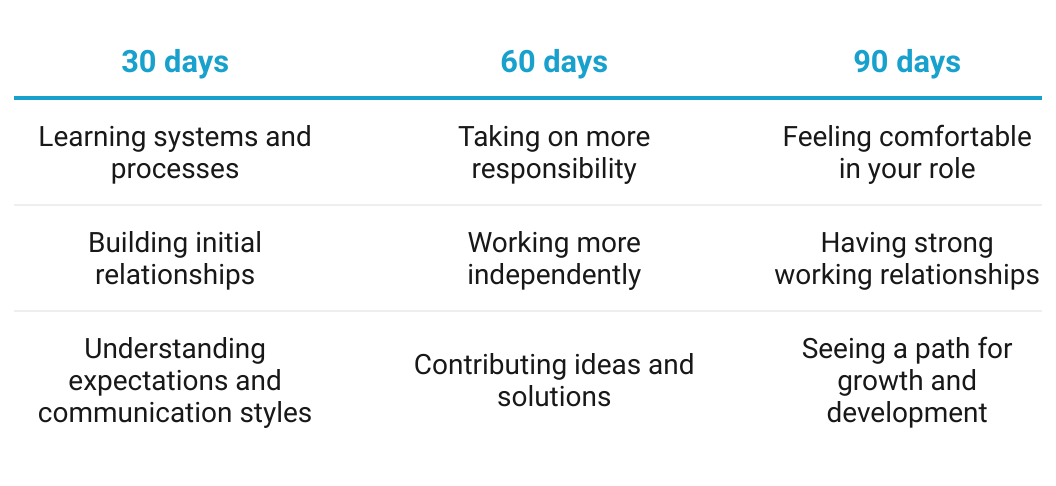
Not every role follows this timeline perfectly, but viewing onboarding as a progression rather than a single milestone helps reduce pressure and keeps expectations realistic. This phased approach supports steady growth without unnecessary overwhelm.
Feedback and Ongoing Check-Ins
Regular feedback plays a critical role in how confident and engaged new hires feel. While placement services typically do not manage ongoing check-ins once you start a role, they often encourage job seekers to seek feedback early and view it as a tool for alignment rather than evaluation.
When placement support is available, it may act as a neutral sounding board, helping you reflect on your experience and prepare for internal conversations.
These conversations may cover:
- How you are feeling in the role
- Whether expectations are matching reality
- How feedback is being delivered
- What support you might need next
Small concerns addressed early are far easier to manage than issues left to grow. Developing the habit of checking in with yourself and others during these months can significantly improve your onboarding experience.
What to Do If Onboarding Support Feels Limited
Not every company has a strong onboarding process, and not every placement service provides ongoing post-hire coaching. If you find yourself with minimal structure during your early weeks, there are still practical steps you can take to stay on track.
You can start by:
- Scheduling a short check-in with your manager to clarify priorities and expectations
- Asking teammates how they approached their first few months in similar roles
- Keeping a running list of questions instead of waiting until confusion builds
- Setting small, achievable goals for yourself during the first few weeks
It can also help to reflect regularly on what you are learning and where you feel unsure. This gives you concrete points to discuss during feedback conversations and helps you take ownership of your progress.
Even without formal onboarding support, being proactive and informed can significantly improve your early experience. Placement services help you reach this stage with stronger self-awareness and preparation, which often makes the difference when structure is limited.
Measuring Success from a Job Seeker’s Perspective
Success during onboarding looks different for everyone, but it is rarely about perfection or immediate mastery. For job seekers, a successful onboarding experience is one that builds confidence over time, provides enough support to keep learning manageable, and creates a sense of forward momentum. Rather than judging yourself by rigid timelines or comparing your progress to others, it is more helpful to look for steady signs that things are moving in the right direction.
Signs That Onboarding Is Working for You
Instead of focusing on company metrics or performance scores, job seekers can look for personal indicators that reflect growth, clarity, and engagement.
Some of the most meaningful signs include:
- Feeling clearer about expectations over time, even if everything was not clear at the beginning. Progress matters more than instant understanding.
- Gaining confidence in your abilities, particularly when tasks that once felt intimidating begin to feel manageable or routine.
- Receiving regular, constructive feedback that helps you adjust rather than leaving you guessing where you stand.
- Building positive relationships with teammates, making it easier to ask questions, collaborate, and feel included.
- Seeing opportunities to learn and advance, whether through new responsibilities, skill development, or conversations about future goals.
It is also worth paying attention to how challenges feel. When onboarding is working, setbacks tend to feel solvable rather than overwhelming. You may still feel stretched at times, but you are able to identify where to improve and who to turn to for guidance.
When these elements are present, onboarding is doing its job. Even if progress feels gradual, these signals suggest that you are integrating into your role in a healthy and sustainable way.
Choosing a Placement Service That Supports Your Success
Not all placement services offer the same level of support. Choosing the right one matters.
A job seeker-focused placement service should:
- Take time to understand your goals and preferences
- Be honest about role challenges, not just benefits
- Stay in touch after you start the job
- Support you through the early adjustment period
Red flags include:
- Pressure to accept roles that do not feel right
- Little communication after placement
- Vague answers about expectations or culture
- Lack of interest in your long-term growth
The right partner feels invested in your success, not just the placement.
Final Thoughts
Getting hired is only the beginning. How you are supported during onboarding can shape your confidence, performance, and long-term satisfaction.
Job placement services that stay involved beyond the offer letter help you avoid costly missteps, navigate early challenges, and build a strong foundation in your new role. For job seekers, that support can turn a stressful transition into a positive, career-building experience.
If you are preparing for a job search or thinking about your next move, TopResume’s GetHiredNow job placement service is designed to help you approach the process with greater clarity and confidence, from identifying the right opportunities to stepping into your next role better prepared to succeed.

Written by
TopResume, a Talent Inc. company, is the largest resume-writing service in the world, and writes and analyzes more resumes, cover letters, and LinkedIn profiles than any other service. Let us help you write the next chapter of your career. Click on the following link to learn more about our services.